King George VI and Queen Elizabeth Luncheon Cruise – June 9, 1939

King George VI and Queen Elizabeth Luncheon Cruise – June 9, 1939

USS POTOMAC MINI-HISTORY

BY WALTER ABERNATHY

King George VI and Queen Elizabeth Luncheon Cruise – June 9, 1939

King George VI1 was the first reigning British monarch to visit the United States. It was June 1939, when war in Europe was imminent. Three months earlier, Hitler had seized Czechoslovakia and put Slovakia under German “protection.” Appeasement had failed. Francisco Franco took Madrid at the end of March 1939.

As war with Germany threatened Great Britain, the King’s visit was largely political, aimed at strengthening relationship with the United States in the face of strong American isolationism and weariness of European entanglements that might drag the county into another foreign war.

The King wore his crown because of an American. His older brother, David, had assumed the throne as King Edward VIII when his father, King George V, died on January 20, 1936. David was recognized as a Nazi sympathizer and playboy. David’s father had earlier predicted to Prime Minister Stanley Baldwin that “after I am dead the boy will ruin himself within twelve months.” He announced plans to marry a soon-to-be a twice-divorced American socialite, Wallis Simpson. For a twice-divorced woman to become queen was unacceptable to the Church of England and the government, leading to his abdication on Dec. 11, 1936, and succession by his younger brother, Albert (Bertie), who took the crown as George VI.

The royal visit included motorcades in Washington and Manhattan seen by hundreds of thousands, a state dinner climaxed with an eloquent presidential toast and songs by Kate Smith and Marian Anderson and a luncheon cruise on the USS Potomac.
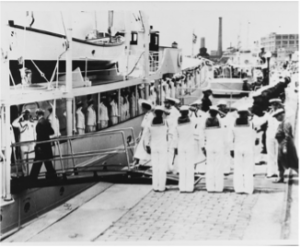
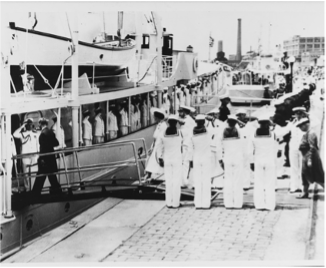
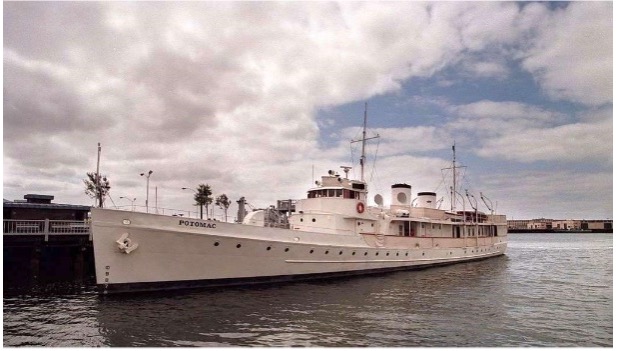
It was “bloody hot” on June 9, 1939, when the King and Queen boarded the USS Potomac at the Navy Gun Factory pier in Washington to a 21-gun salute and the welcome of President Franklin D. Roosevelt and First Lady Eleanor Roosevelt. The King brought on board his own five-gallon container of water from England (you can never be too sure).

It was a short cruise down the ship’s namesake river including luncheon on board to George Washington’s home and tomb at Mount Vernon, Virginia, arriving about noon. The king laid a wreath at George Washington’s tomb which might have been an issue with his great-great-great grandfather, King George III (Mad King George), Washington’s adversary in the Revolutionary War.
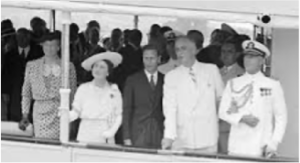
The Royal visit by the Presidential Yacht to Mount Vernon was only possible because a few months earlier, FDR had arranged for the river to be dredged and marked to afford safe navigational access to the Mount Vernon wharf. Today’s navigation dredging projects can take more than 20 years.

The cruise to Mount Vernon was a favorite of the President. His custom whenever passing Washington’s tomb, as prescribed by Navy Regulations, was for the crew (those not on station) to man the rail and as the ship came abreast the tomb, the boatswain would pipe, “Attention” then “Hand salute” then “Carry on” while the Colors were lowered, then raised – total elapsed time, about a minute.

In addition to their Britannic Majesties, the President and Mrs. Roosevelt, Canadian Prime Minister Mackenzie King and aides, the shipboard luncheon was attended by the senior leadership and wives of the United State government, including the Secretaries of State, Treasury, War, Interior, Agriculture, Commerce, Labor, Attorney General, Postmaster General and the Chief of Naval Operations.2

Card tables3 were arranged for luncheon in the Potomac wardroom and fantail where the President and Mrs. Roosevelt were seated with their Britannic Majesties using White House china.

Although the King’s schedule was crowded with a series of ceremonial and highly public events, there was time for a few one-on-one private discussions with FDR, the first in the President’s study following the White House state dinner. These confidential discussions continued when the royal party concluded their trip with a more relaxed schedule at the Roosevelt compound in Hyde Park.

There the President and Mrs. Roosevelt arranged the much-publicized picnic at Hyde Park’s Top Cottage for their Britannic Majesties featuring hot dogs, baked beans, and strawberry shortcake but served on silver dishes. The King chomped down with gusto on his American-style sausage. The baffled Queen resorted to a knife and fork.

In this more relaxed atmosphere, the President and the King, sometime with and without Canadian Prime Minister McKenzie, continued their confidential conversations. One long tête-à-tête at Hyde Park between FDR and King George lasted until 1:30 AM, when the President said, “Young man it’s time for you to get to bed.”

“He is so easy to get to know and never makes one feel shy, as good a listener as a talker,” George VI later wrote about FDR. One probable key factor in their instantaneous rapport was that each had overcome a challenging disability: FDR’s polio, and the King’s severe speech problems (see movie “The King’s Speech”). The King’s speech handicap had also served to strengthen his traits as a “good listener.”

Shadowing these discussions was the Neutrality Act, which FDR was trying to amend or repeal, to enable America to supply armaments to Britain. FDR told George VI that he still hoped “something could be done to make it less difficult for the USA to help” what he described as the “firm and trusted” Anglo-American alliance. He showed the King a map of his plans for naval patrols and bases. This ocean patrol plan led to the essential U.S. trade of “Destroyers for Bases”4 and “Lend Lease” that eventually evolved into lifesaving assistance from the United States.

The King recorded these private conferences with FDR in a memorandum entitled “FDR’s ideas in case of war.” Back in London he would convey “the essence” of these discussions to the “proper quarters.” The actual documents he would keep to himself and carry with him in his red dispatch box wherever he went during the Second World War. He would, however, share Roosevelt’s map with officials at the Admiralty and explain “what Roosevelt had in mind.”

The King and Queen ended their five-day visit when they boarded the royal train for their return trip to Canada at the Hyde Park Station with the crowd signing “Auld Lang Syne.” Less than three months later, Germany invaded Poland. Great Britain and France declared war on Germany starting World War II.

Although His Majesty’s time on the USS Potomac was short, the “Floating White House” continued as a venue for implementing both of FDR’s promises of support, “Destroyers for Bases” and “Lend Lease.”

USS Potomac – “Destroyers for Bases”


  • On March 24, 1941, President Roosevelt, while on the USS Potomac in waters off Florida, signed a message to Congress transmitting the text of the agreement for the use and operation of the United States bases in British territory, which had been obtained in exchange for the 50 S. destroyers previously transferred to the British government. The message was to leave by plane the following morning to ensure that it would be delivered to Congress on Thursday, March 27.
  • During his 1941 Florida fishing trip on the USS Potomac, President Roosevelt used the ship’s radio room to send and receive secret dispatches to “former naval person,” his alias for British Prime Minister Winston Churchill, concerning the “Destroyers for Bases” British war support


USS Potomac – “Lend Lease”


  • On March 27, 1941, still on the USS Potomac the President signed R. 4050, an Act of Congress appropriating

$7 billion to fund the Lend-Lease act enacted earlier in the month and presented the signatory pen to Harry Hopkins, who had been FDR’s personal envoy to orchestrate the U.S.–British wartime alliance. It was a big day for Harry Hopkins. Later, his 7.5-pound mackerel and his 6-pound tuna took honors for the first and second largest catch of the day.

 NOTES

1 King George VI and Queen Elizabeth were the parents of Queen Elizabeth II, the longest reigning British Monarch who acceded to the throne on Feb. 6, 1952 and died Sept. 8, 2022.

2 See attached USS Potomac luncheon guest list from archives Franklin D. Roosevelt Presidential Library

3 See attached table layout plan USS Potomac luncheon from archives Franklin D. Roosevelt Presidential Library

4 An agreement between the U.S. and U.K. on Sept 2, 1940, to transfer 50 U.S. Navy destroyers to the Royal Navy in exchange for British possessions.
Grounded at Shangri-La

Grounded at Shangri-La

In the fall of 1941 after five years of maritime service including on ocean waters, a panel of Coast Guard inspectors suddenly announced that the USS Potomac was unseaworthy.  The cause given was that she was “top heavy” with a new deck added when converted into a presidential yacht in 1936.  Ballast had been added to compensate for the extra weight above decks.

Possibly a charade, the secret service had become more and more concerned about the war time challenges of protecting the President on a small ship in open waters vulnerable to air and submarine attack.  German U-boats were traveling the North Atlantic within sight of New York City. 

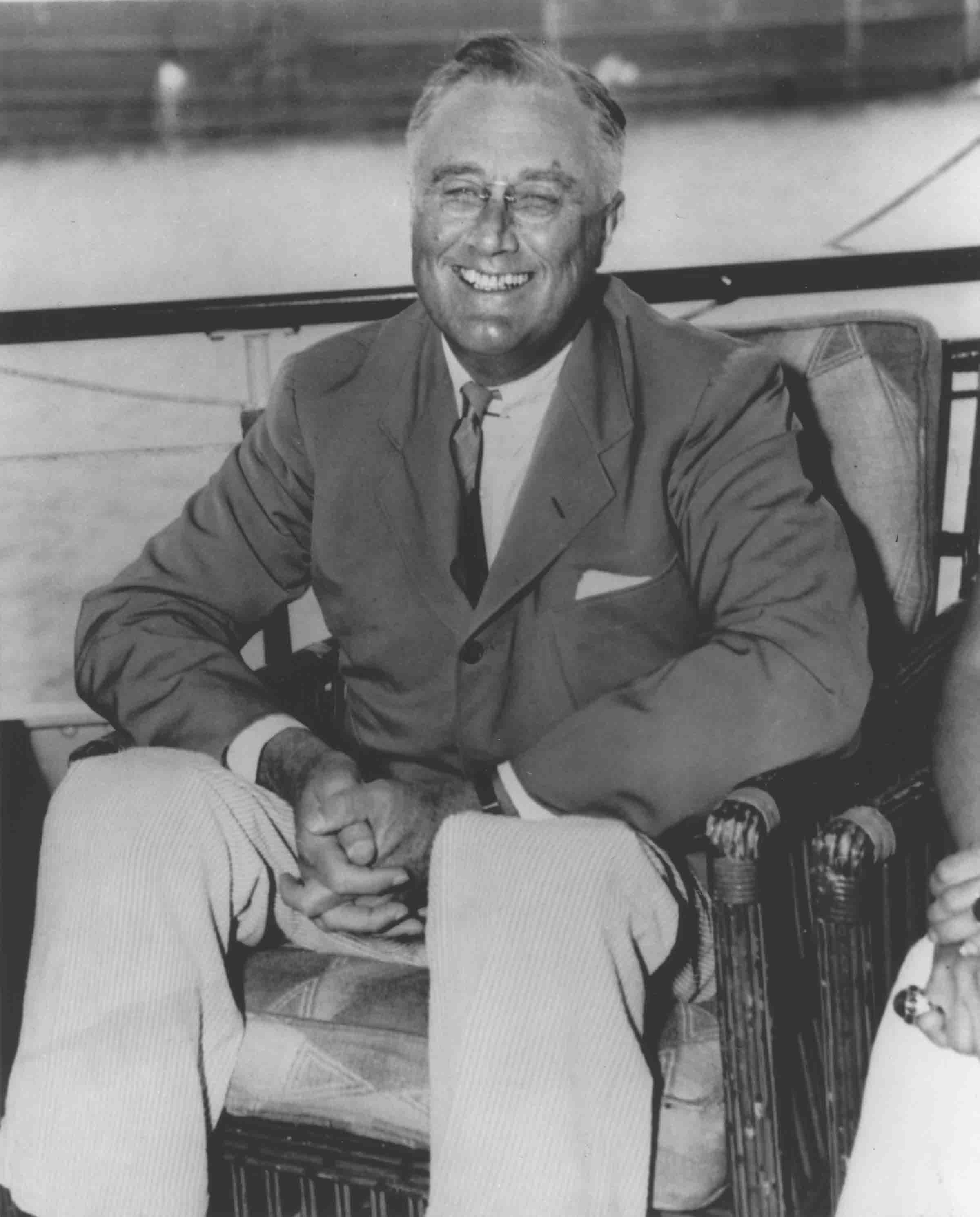
Before the war the President almost lived on the Potomac with regular weekend cruises on the Potomac River and Chesapeake Bay and occasional open ocean fishing trips.   FDR relied heavily on the Potomac for his relaxation and overall well-being.  If the Potomac was restricted, a therapeutic shoreside substitute had to be found.  His doctors urged the ailing president to find a secure place convenient to Washington, yet far enough away to escape the heat and political pressures of the city.

If grounded, he preferred a cool mountain location to escape the steamy Washington summers.  A search committee was formed.  After touring sites, FDR picked a 125-acre former Civilian Conservation Corps[1] camp managed by the National Park Service in the Catoctin mountains about 65-miles from Washington near Thurmont, Maryland.  Originally known as Hi-Catoctin, the camp had been built by the Works Progress Administration[2] as a retreat for federal government agents and their families.  To start the process of its conversion to a presidential retreat, FDR immediately staffed it with the U.S. Navy mess crew from the “Floating White House.”  The Potomac was coming ashore.

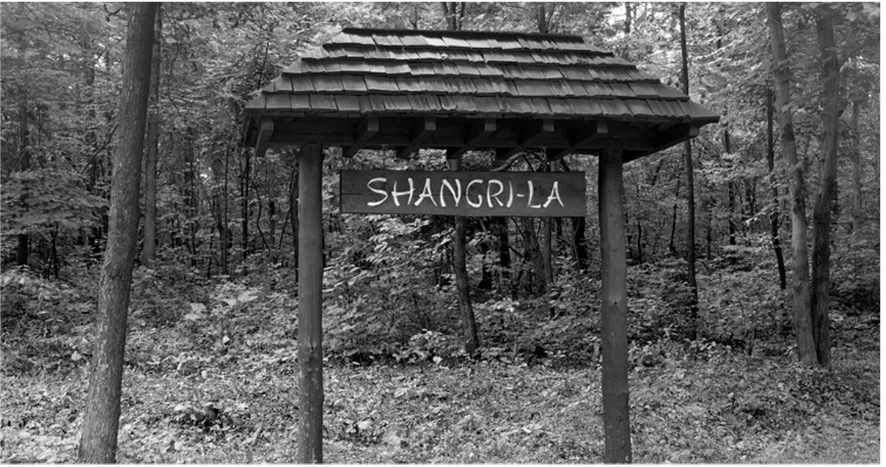
On his first visit, FDR named the new camp Shangri-La[3] after the fictional Himalayan paradise signifying mystery in the mind of the President.  The President’s cabin was named “The Bear’s Den.”  The Potomac mess crew were housed in a cabin named “Little Luzon.”  They helped prepare the new retreat including hanging the art sent from the White House for the “Bear’s Den.” On his first “trial run” to Shangri-La, FDR commended the stewards and pronounced “Shangri-La” accepted by the Navy.  The next day he had the art re-hung.

 If he could not be on the Potomac, he made sure his new retreat took on a nautical flair.  He kept a logbook for his visitors to sign just as they would when boarding the USS Potomac.  On his first visit, FDR wrote in his book, “USS Shangri La.  Launched at Catoctin.  July 5, 1942.”  Each succeeding visit was recorded as a “cruise” in the logbook.  The logs show entries in his own handwriting, including “Commissioned,” “Full Steam,” “First Trial Run,” “Another Cruise,” “Re-Commissioned.”

In addition to rest and relaxation, the Potomac mess crew provided meals designed to please their boss that would never have been approved by Henrietta Nesbitt, czar of the kitchen at 1600 Pennsylvania.

Although designated unseaworthy, FDR had one more job for the USS Potomac and her crew.  On November 11, 1943, after a long absence, he boarded the yacht for a top-secret rendezvous the next day with the USS Iowa to start travels to his World War II conference in Teheran with British Prime Minister Winston Churchill and Russian Premier Joseph Stalin.  The Normandy invasion of France was confirmed at this conference.  His mess crew was released from shoreside Shangri-La duty to join him on the USS Iowa for the Teheran trip.  After transferring the President in secret to the Iowa, the Potomac with a vessel escort cruised incommunicado for about a week to create the impression that the President might be on aboard instead of at risk crossing the Atlantic.

The USS Potomac met the USS Iowa when she returned from the war conferences.  FDR transferred back to his presidential yacht on December 16, 1943, staying overnight moored offshore Quantico, VA., returning to the Washington Navy Yard the next morning.  He was met by the First Lady after a 17,442-mile trip on land, sea and air that started and ended on the Potomac.  It was FDR’s final trip on his beloved “Floating White House.”

President Roosevelt died at Warm Springs on April 12, 1945, shortly after returning from the Yalta war time conference.  His successor, President Harry S. Truman used the “top heavy” Potomac on several occasions including a July 4 cruise to plan for the Potsdam war conference and for the use of the Atom bomb. 

The new President selected the larger USS Williamsburg as the new presidential yacht replacing the Potomac.  The USS Potomac was decommissioned as a Navy Vessel on Nov. 18, 1945.

Hard to believe but the USS Williamsburg was also “top heavy” because of extra decking added when converted to a presidential yacht.

The U.S Navy has continuously operated Shangri-La/Camp David ever since President Roosevelt assigned his USS Potomac mess crew to this new shoreside duty in 1942.

[i]

[1] The Civilian Conservation Corps (CCC) was a FDR New Deal voluntary work relief program that supplied manual labor jobs related to conservation and development in rural public lands.

[2] The Works Progress Administration (WPA) was a New Deal program created by President Franklin D. Roosevelt in 1935 for the unemployed during the Great Depression.

[3] Later renamed “Camp David” by President Dwight Eisenhower for his father and

grandson, both named David.

[i] Sources:

“The Presidential Yacht Potomac” by Capt. Walter W. Jaffee

“Sailor in the White House” by Robert F. Cross

“White House Sailor” by William M. Rigdon with James Drieux

”Roosevelt: The Soldier of Freedom (1940-1945)” by James MacGregor Burns

FDR’s Run for a Third Term as Planned on the USS Potomac

FDR’s Run for a Third Term as Planned on the USS Potomac

George Washington set the precedent, reinforced by Thomas Jefferson, of a two-term limit for United States presidents.  It was challenged 141 years later by Franklin D. Roosevelt.  He had won two terms by landslides in 1932 and 1936.   No president before had challenged the two term “cherished tradition,” although Cousin Teddy came close.

Before the events of 1940, FDR had planned to retire to his family estate at Hyde Park at the end of his second term evidencing a genuine desire to write and think in peace in the role of an elder statesman.   He had been occupied with building a small stone cottage overlooking the Catskills to the north and plans for a presidential library.

But in the evening of May 9, 1940, the phone rang in his comfortable study on the second floor of the White House.   FDR listened as his ambassador to Belgium told him that Hitler’s armies were simultaneously attacking Holland, Luxembourg, Belgium and France.  Everyone’s plans were about to change.

The country was still in an isolationist mood. With Hitler’s rapid military success, FDR recognized the urgent need to lead America to the most profound transformation in its history.  He internalized that his leadership was critical to America becoming the “Arsenal of Democracy” and to prepare for the country’s own military defense.

 Others in his party were not so sure.  Politicians started jockeying for position assuming FDR would abide by the well-established two term limitation.  FDR refused to say whether he would run or not and paralyzed the political process.

 Things got more difficult when his long-time friend, political ally and chairman of the Democratic National Committee (DNC) James Farley told FDR he planned to run in any event even after Roosevelt told him he would allow his name to go before the convention “….I feel I owe it to my party.”[1]

FDR knew it would have to be a draft not an outreach on his part. His challenge became how to carefully plan, manage and organize a “spontaneous” draft.  He had repeatedly announced that he had no plans to attend the nomination convention in Chicago scheduled for July 15 – 18.  He believed he deserved a “spontaneous draft” from the party he had led so well and long.  He also realized that a draft would make him stronger in the general election the less anxious he seemed for a third term, which both Washington and Jefferson had refused.

FDR needed an environment for thought and planning.   As in the past, he turned to the USS Potomac where he often relaxed, planned and refueled personally.  He announced an overnight cruise on the Potomac two days before the Chicago nominating convention.  Inclusion of Judge Sam Rosenman on the guest list was a clue that fishing was not the only purpose.  FDR had relied on Rosenman, a close ally and gifted writer, for help with the party platform and acceptance speeches in 1932 and 1936. 

On the Potomac drifting down its namesake river, FDR explained the task at hand ….  a statement that he was not actively seeking a third term.  He wanted delegates to feel free and clear to vote for whomever they wanted.  Over his advisors’ objections, he stubbornly insisted that, unless the convention came to him with an overwhelming show of support, he would refuse the nomination. 

As Rosenman started working on the statement.   The president fished, read the papers and sorted his stamps.   Rosenman is quoted as saying “One would never imagine that significant political history was being made (on the Potomac) by the calm, thoughtful man sitting in the stern relaxing with his hobbies.”  That evening after dinner the president caught a rock bass and an eel.  He then went to work on the brief message Rosenman had drafted.[2]   

The presidential party returned from the Potomac to the White House late Sunday afternoon in oppressive heat.  The convention opened the next day in Chicago.  FDR and guests listed on the radio in the White House.  Eleanor was at Hyde Park.  Delegates were irritable.   They were worried about the third term issue and the popularity of the Republican nominee, liberal businessman Wendell Wilkie.   They wanted the President to tell them what he wanted.   Secretary of the Interior Harold Ickes wired the President “This convention is bleeding to death and your reputation and prestige may bleed to death with it.”[3]  Ickes told the President he must appear.

The President was insistent.   For the sake of the general election and the historical record, he wanted to make it clear he was not actively seeking an unprecedented third term, demanding the convention come to him of its own free will.  I have never seen the President more stubborn, Rosenman recalled.

The president’s statement drafted on the Potomac was given to Senator Alben Barkley of Kentucky to read at the end of the keynote address on Tuesday.  The proceeding had run long, and it was nearly midnight in Washington when Barkley approached the podium.   FDR asked Eleanor to listen at Hyde Park.  

An old school, red-faced Southerner, Barkley described the great achievements of the New Deal in an oratorical frenzy before getting to FDR’s message.  He then said “The President wished to make clear to the convention he had no wish to be a candidate again and that all the delegates to this convention are free to vote for any candidate.”  There was silence.  A failure to understand.   The statement said neither yes nor no.   But it did not say he would refuse to serve if nominated nor did he recognize the power of the two-term tradition. 

The delegates set in stunned silence, then from a single loudspeaker not in view, a booming voice shouted, “We want Roosevelt.”  The crowd ignited and picked up the chant.  “We want Roosevelt.”   “New York wants Roosevelt.”” California wants Roosevelt.”

Later, it was traced that the booming voice first chanting “We want Roosevelt” came from the basement where Chicago’s mayor had planted his “leather-lunged, potbellied” superintendent of sewers with a powerful microphone and detailed instructions to begin the stampede as soon as Barkley finished reading the president’s statement.[4]

The next day the president was urged to appear at the convention to bring the delegates together.   He refused but relented for Eleanor to appear.  On the first ballot, the president received 946 votes and 150 went to the other candidates including Farley, who suspended the rules to declare Roosevelt the candidate by acclimation.  Although the “draft” will always have quotation marks surrounding it, the president’s plan conceived on the Potomac had been achieved nonetheless without a party split that could have hurt chances in the November general election.

A fight for the vice president nominee followed with the president drawing a hard but successful line for Henry Wallace to ensure his liberal agenda going forward.

Just after midnight on July 19, FDR accepted his nomination by the Democratic Convention in Chicago by radio from the Oval Room, basement floor, in the White House and then went to bed at 2:30 a.m.  

 At 6 p.m. that afternoon, the president and his party returned to the Potomac for two days to relax and reflect.  His planning that originated on the ship had caused some bruises and hard feelings but had been successful for an unprecedented and never to be legally duplicated third term.  Sam Rosenman was not needed on this victory cruise.

On Nov. 5, 1940, Franklin D. Roosevelt defeated Wendell Willkie to be reelected for an unprecedented third term with 54.7% of the popular vote.   The president was at Hyde Park where he voted earlier in the day.   When the results were announced, he appeared on the porch to see a boy with a placard reading “SAFE ON THIRD” replacing a crossed-out earlier message “OUT STEALING THIRD[5].”

He was elected and the country was heading for war.

[1] “No Ordinary Time” by Doris Kearns Goodwin


[2] Information from “No Ordinary Time” by Doris Kearns Goodwin

[3] “No Ordinary Time” by Doris Kearns Goodwin

[4] “No Ordinary Time” by Doris Kearns Goodwin

[5] “Roosevelt: The Soldier of Freedom (1940 -1945)” by James MacGregor Burns

USS Potomac’s Role in President Roosevelt’s Tehran Conference

USS Potomac’s Role in President Roosevelt’s Tehran Conference

Recent release of the bestselling book, “The Nazi Conspiracy, the Secret Plot to Kill Roosevelt, Stalin & Churchill,” reminds us of President Franklin Delano Roosevelt’s 1943 North Africa/Middle East trip including the first meeting with Winston Churchill and Joseph Stalin in Tehran. Earlier on this trip, FDR and Churchill met in Cairo with China President Chiang Kai-shek to discuss progress in the war with Japan and the future of Asia.

Little has been publicly recognized about the USS Potomac’s highly secret role in this trip to plan the final stages of World War II in both Asia and Europe.

Like its earlier role in 1941 as a decoy for his clandestine trip to meet with Winston Churchill for the Atlantic Conference off the coast of Newfoundland, again, the USS Potomac played a less recognized ruse role for the President’s get away. Secrecy was imperative. FDR was running grave personal risk in crossing the Atlantic for the conferences.  

At noon, Nov. 11, 1943, the Potomac, commanded by Lieutenant Commander John H. Kevers, USN, cast off lines at Washington Navy Yard and departed for the Quantico, Virginia, marine base arriving in the early afternoon.

At 9:30 p.m., the President left the White House by automobile for Quantico. He was joined by Harry L. Hopkins, Admiral Willian D. Leahy, Rear Admirals Wilson Brown and Ross T McIntire, Major General Edwin M. Watson and Lieutenant George A. Fox.   Other members of the President’s party had proceeded to Quantico earlier in the evening.

The utmost secrecy concerning the President’s proposed movements was observed. At Quantico, only the Commanding General and the Commanding Office of the Marine Base had knowledge of the President’s impending arrival.

At 10:38 p.m. the President and his party arrived at Quantico and immediately transferred to the Potomac for the first sea leg on the long journey for meetings first in Cairo and then in Tehran on Nov 28 to Dec. 1, 1943.

At 10:44 p.m., with the President and his party aboard, the Potomac cast off lines and set course down her namesake river for a rendezvous with the battleship USS Iowa[1] in the Chesapeake Bay near the confluence with the river. All members of the President’s party turned in soon after leaving Quantico. Strong winds earlier in the afternoon had abated to permit smooth sailing down the river. During the night, the Potomac exchanged calls with navy vessels bound up-river having transported the country’s senior military leadership and their baggage to the Iowa. In addition to the country’s top military brass, travelers boarding included the mess crew from the Potomac who would later prepare a grilled steak dinner for Stalin served with FDR’s prepared martinis (Stalin: “Well its all right, but it is cold on the stomach”).

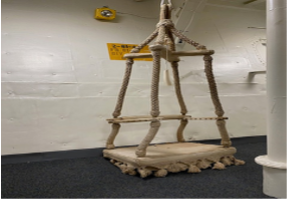
At 8:30 a.m. the next day, November 12, 1943, the Potomac got underway to go alongside the Iowa arriving to starboard, and at 8:51 a.m. the transfer of the party was begun using a special rig (see photograph of the special bosun’s chair built for the FDR transfers to/from the USS Potomac and the USS Iowa) from the after sundeck of the Potomac to the main deck of the Iowa, just abreast of the Iowa’s number three turret. This arrangement afforded a safe and comfortable means of transfer of the President who left the Potomac at 9:16 a.m. At his request, no honors were rendered when the President came on board the Iowa. Due to war-time restrictions, his flag was not broken on the Iowa.

At 9:45 a.m., the transfer of the party completed, the Potomac shoved off from alongside the Iowa and left for a secret destination with a vessel escort instructed to remain out of sight and incommunicado with the shore for a period of not less than one week. This was ordered to create the impression that the President might be on a cruise on the Potomac instead of at risk crossing the Atlantic.

In Tehran, the United States and Britain committed to launching the Normandy invasion of France in mid-1944. (Operation Overlord).  Stalin agreed in principle to join the war against Japan in the Pacific after Germany was defeated. Tehran, the capital of Iran, had been chosen because it was protected by all three allied forces and was just a short run from Moscow, a condition for Stalin’s participation.

On Dec. 16 at 4:19 p.m., (low temperature of 23 degrees) the USS Iowa anchored off Cherry Point, VA to rendezvous again after 35 days with FDR’s yacht, USS Potomac, and two destroyer escorts. The Potomac came alongside and moored to the port side of the Iowa. At 5:19 p.m., FDR and his party left the USS Iowa and went on board the USS Potomac. The transfer was made by means of brow rigged in the same manner as when he boarded the battleship on Nov.12. No honors were rendered on FDR’s transfer back but the USS Potomac broke his flag at the main when he came on board.

At 5:26 p.m. the Potomac got underway from alongside the USS Iowa and proceeded up the Potomac River enroute to the Navy Yard, Washington D.C. escorted astern by the USS Booth. FDR worked on official mail as his presidential yacht headed to anchorage in the Potomac River just above Quantico, VA (Stump Neck). FDR had indicated that he did not desire to return to Washington, D.C. until 9 a.m. the next day.

On Dec. 17 at 6:00 a.m., the Potomac and USS Booth got underway from anchorage at Stump Neck for the Navy Yard, Washington, D.C. Small ice floes were encountered while the party proceeded up the river.

At 6:50 a.m., the two ships arrived at the Washington D.C Navy Yard. The Potomac was tied up. FDR was met by Eleanor Roosevelt and members of his immediate family who came on board the ship. He left the Potomac at 9:15 a.m. for a fifteen minute trip to the White House where he was met by a large delegation of his friends on hand to welcome him back home after a trip that had taken him 17,442 land, sea and air miles. He was greeted in the Diplomatic Reception Room by cabinet and members of congress (56).


[i]

[1] The USS Potomac and the USS Iowa are reported as the only two ships in the U.S. Navy with bathtubs which were added to accommodate the physical needs of their most senior shared passenger.

[i] There are many books and references related to FDR’s 1943 trip to North Africa and the Middle East but “As He Saw It,” a book by FDR’s son Elliott Roosevelt (and father of the USS Potomac Association Executive Director, Ford Roosevelt, with a foreword by Eleanor Roosevelt) provides a recommended insider and intimate view of many of the most sensitive meetings and events of this trip.

Potomac’s Filipino Mess Crew

Potomac’s Filipino Mess Crew

The Spanish-American conflict was a “splendid little war[1]” that marked America’s entry as an imperial power into world affairs.  Coincidentally that same splendid little war was the origin of the USS Potomac’s all-Filipino mess crew and control of the White House mess by the U.S. Navy to this day.

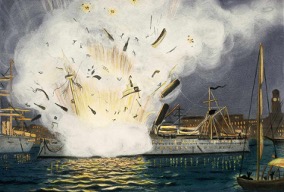
It started in 1898 with the sinking of the USS Maine in Cuba by a mysterious explosion with the loss of 266 souls.   The Maine was positioned in Havana Harbor to support Cubans against Spanish rule. Was it sabotage or an internal accident?  There was little patience for an investigation by a public enraged by a barrage of media coverage[2]  about Spain’s brutally repressive measures to halt a Cuban rebellion. Enough was enough.  On April 25, 1898, The United States declared war on Spain including its possessions of Cuba, Puerto Rico, Guam and the Philippines with the slogan, “Remember the Maine.”  

The Philippines had been under Spanish rule for 333 years. In a few hours on May 1, American Commodore Dewey destroyed the Spanish fleet and captured Manila’s harbor with only nine wounded.  The U.S. sent ground forces to the conflict and captured the city of Manila.   On December 10, 1898, the Spanish government ceded the Philippines to the United States in the Treaty of Paris.  We were the new colonizer for the Filipinos to resist.  American colonialization was for 48 years until the U.S. recognition of Philippine independence in 1946.

The USS Potomac would be a beneficiary of the U.S. new relationship with the Philippines.  President William McKinley signed an executive order in 1901 allowing the Navy to enlist 500 Filipinos as part of the insular force.  In a number of Philippine communities, joining the U.S. Navy became a tradition as well as a badge of distinction.  Navy bases in the Philippines exposed local people to American wealth, culture and standards of living, generating strong incentive for investment.  Most applicants were assigned to steward duties including on presidential yachts. 

There is a history going back to President Rutherford Hayes in 1880 that navy stewards were first utilized to provide food services to the Commander-in-Chief on the Presidential Yacht Dispatch.  The USS Potomac continued those traditions and had a mess crew of twelve, all Filipino U.S. naval personnel.

 In 1942, FDR established a presidential retreat tucked away in the Maryland Catoctin mountains and named it “Shangri-La.”[3]     FDR directed that his Potomac Navy stewards provide messing services at Shangri-La establishing the precedent of Navy personnel to serve the President and his staff ashore.   With the Potomac Filipino mess crew coming ashore, the tradition was established for the U.S. Navy’s continuous and current operation of the White House Mess.

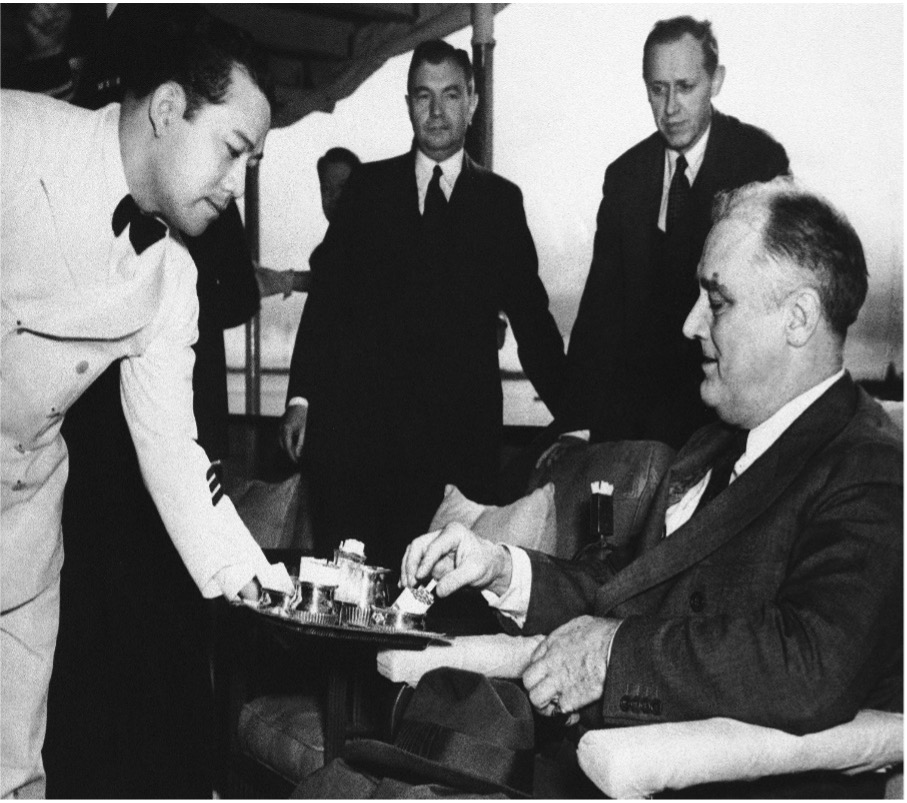
Irineo Esperancilla (FDR called him Isaac), a chief steward on the Filipino staff, described his specific orders[4] aboard the Potomac to include:
  • You will sleep on the fantail after all the guests have turned in. In case of inclement weather, you may sleep in an easy chair in the wardroom.  You will not go below at any time unless ordered to do so.
  • You will at all-time be available in case of an emergency to assist the president to his room and will close all windows in his cabin.
  • In case of abandon ship, you will assist in transfer of the president to another ship or boat.


Food was important to FDR but not the First Lady.  He would win World War II, but he surrendered control of his meals to White House Housekeeper Henrietta Nesbitt.   Selected by First Lady Eleanor and sharing her liberal politics, Mrs. Nesbitt had no experience in food planning but was in charge of the White House menu and ruled the domestic staff like a Prussian field marshal. FDR announced early on that he disliked broccoli, yet Mrs. Nesbitt kept serving it to him.  He would ask for coffee and get iced tea.  The New York Times ran a story in 1937 headed “Same Meal Four Days Irks Roosevelt.”  He told friends he wanted a fourth term, “just so I can fire Mrs. Nesbitt.”  He died. She survived.  Finally, she crossed First Lady Bess Truman who ended her tyranny.

The USS Potomac Filipino mess crew provided some culinary relief and accompanied FDR on shore to cater when he entertained outside the White House.  Most notably, they joined him for the World War II Cairo and Teheran conferences in 1943.   His mess crew was already on the USS Iowa with their provisions including turkeys for Thanksgiving dinners when President Roosevelt transferred in secret from the Potomac in Chesapeake Bay.  He re-joined his mess staff and the senior leadership of the U.S. war effort to start a 17,442-mile roundtrip for dinners and meetings that included the D-Day invasion decision and plans for the final stages of World War II.

 After the president boarded the Iowa, the presidential yacht shoved off.  She was instructed to remain out of sight and incommunicado with the shore for a period not less than a week to create an impression that the President might be onboard instead of at risk crossing the Atlantic.

Commander William Rigdon managed the Filipino staff from the White House.  He served as Assistant Naval Aide to the Chief Executive of the United States.   In his book, “White House Sailor,”  he writes:

 “I was early put in charge of the wonderful Filipino stewards from the Presidential yacht who always accompanied the President away from Washington to prepare and serve his meals, and also the big luncheons and dinners he often gave.  They were loyal.  They were tireless.  Often they were sleepless-and always they worked silently.”

Thanksgiving was in Cairo for meetings with Churchill.  Roosevelt wanted a “family affair” traditional American Thanksgiving dinner for Churchill and his daughter Sara.  His Filipino mess crew prepared two enormous turkeys and pumpkin pies served with champagne while an army band was playing.  The turkeys were brought to the dining table by Chief Stewards Orig and Esperancilla to be carved for more than 20 guests by FDR propped up high in his chair.  He calculated correctly with just enough left for himself, asking each guest, “Light meat or dark.”[5]  Things got a little rowdy as the evening wore on.  Churchill wearing a one-piece bomb-shelter, zippered-up suit ended up dancing with FDR’s appointment secretary “Pa Watson.”  FDR wrote in a trip diary, “It is an enormous satisfaction to have my mess crew from the Potomac and Shangri-La, music by an army band, & later W.S.C. cake-walked with Pa Watson.”[6] Churchill recalled, “for a couple hours we cast care aside.”  Compliments to their chefs. 

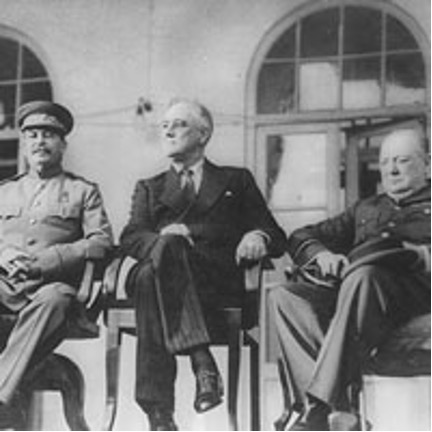
On to Teheran for the first meeting of the Big Three including Joseph Stalin.  He had insisted on that venue for military reasons over the repeated objection of President Roosevelt.  If FDR was going to get a “face-to-face” with Stalin, it would have to be Teheran, or he would send a delegate. Another problem was the American legation (a smaller version of an embassy) was located on the outskirts of the city about 1.5 miles from the centrally located British and Soviet embassies where Churchill and Stalin would be staying requiring risky city travel for meetings.  FDR had insisted on American quarters, but Soviet intelligence learned the Germans were aware of the Big Three meeting and had dropped parachutists in the nearby Russian occupied area near Teheran, a probable assassination squad.  That did it.  The President chose moving to the Russian Embassy to reduce urban travel and, hopefully, strengthening his personal ties to Stalin.  Hidden microphones were a then unknown problem.
Now the entire delegation had to get to the Russian Embassy with a team of Nazi assassins reported to be in the neighborhood.  Deception was the best route.  The Filipino mess crew joined the staff in a “fake motorcade” with a secret service agent in a bullet proof vest posing as FDR winding through the main city street to the Russian Embassy.   Meantime, the real FDR was in a car with a single jeep in the lead racing through the side streets to the embassy.

On Nov. 28, 1943, after an extensive discussion of planning for the Normandy Invasion at the first formal conference session, steak and potatoes were on the menu the mess staff served when FDR hosted the first Big Three ceremonial dinner.  Before the meal he served Stalin his favorite hand-stirred martini.  “All right, but a little cold on the stomach,” was Stalin’s critique.  The dinner had been at risk.  The kitchen had been stripped of range and utensils.  At the last moment the Army brought a field range, a supply of coal, cooking utensils, with a lot of food just in case.[7]

The conference ended on December 1.   FDR, his delegation and staff including the mess crew started on the long journey home on the USS Iowa that would meet again the USS Potomac for the President to transfer to the Presidential Yacht for the final leg back to the White House.

After catering for the allied leadership of World War II, his Filipino mess staff would return to their local duties providing the President with occasional relief from Mrs. Nesbitt’s food tyranny still in command at the White House.

The crew’s final service to FDR for an international World War II conference was at Yalta when he met for the last time with Churchill and Stalin in February 1945.  Probably, their most challenging assignment was the meal service for King Ibn Saud of Saudi Arabia on the USS Quincy on the way home from Yalta. 

Moored at Great Bittler Lake, midway in the Suez Canal, the Quincy received King Saud who arrived on U.S. Navy transport for his first trip outside his kingdom.  It was his first trip on a ship.  Paired down to a retinue of 42 attendants, not the usual several hundred, and 86 live sheep (the king liked his meat fresh), the royal party boarded the Quincy.  The mess crew had been alerted that the menu would be lamb (obviously) and to make it spicy.  

A great success! The king said the “… meal was the first he had eaten in a long time that was not followed by digestive disturbance and he would like, if the President would be so generous, to have the cook as a gift.”  Ordona, the chief cook, went into hiding while FDR explained the cook was under a fixed term contract with the Navy.[8]  

With the full Filipino mess crew intact and aboard the Quincy, FDR returned to Washington on February 27.  President Roosevelt died 44 days later at Warm Springs, Georgia, on April 12, 1945.

[1] Letter to President Teddy Roosevelt from John Hay, then American ambassador to the United Kingdom

[2] William Randolph Hearst reportedly replied to a photographer who said there was no war to cover in Cuba, “You furnish the pictures.  I’ll furnish the war.”


[3] Shangri-La was renamed Camp David by President Dwight D. Eisenhower for his grandson in 1953.

[4] A Glimpse of Greatness” by Irineo Esperancilla

[5] White House Sailorby William Rigdon with James Drieux

[6] “Franklin and Winston” by Jon Meacham

[7] “White House Sailor” by William M. Rigdon with James Derieux

[8] “White House Sailor” by William M. Rigdon with James Derieux