
In the fall of 1941 after five years of maritime service including on ocean waters, a panel of Coast Guard inspectors suddenly announced that the USS Potomac was unseaworthy. The cause given was that she was “top heavy” with a new deck added when converted into a presidential yacht in 1936. Ballast had been added to compensate for the extra weight above decks.
Possibly a charade, the secret service had become more and more concerned about the war time challenges of protecting the President on a small ship in open waters vulnerable to air and submarine attack. German U-boats were traveling the North Atlantic within sight of New York City.
Before the war the President almost lived on the Potomac with regular weekend cruises on the Potomac River and Chesapeake Bay and occasional open ocean fishing trips. FDR relied heavily on the Potomac for his relaxation and overall well-being. If the Potomac was restricted, a therapeutic shoreside substitute had to be found. His doctors urged the ailing president to find a secure place convenient to Washington, yet far enough away to escape the heat and political pressures of the city.
If grounded, he preferred a cool mountain location to escape the steamy Washington summers. A search committee was formed. After touring sites, FDR picked a 125-acre former Civilian Conservation Corps[1] camp managed by the National Park Service in the Catoctin mountains about 65-miles from Washington near Thurmont, Maryland. Originally known as Hi-Catoctin, the camp had been built by the Works Progress Administration[2] as a retreat for federal government agents and their families. To start the process of its conversion to a presidential retreat, FDR immediately staffed it with the U.S. Navy mess crew from the “Floating White House.” The Potomac was coming ashore.
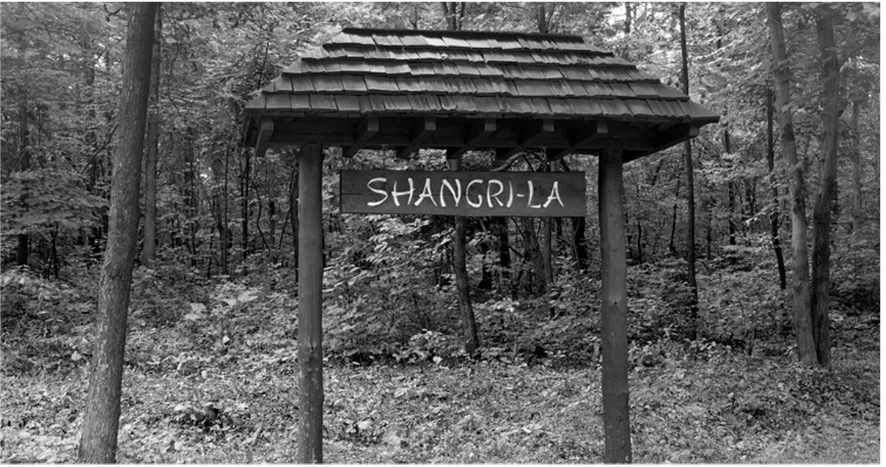 On his first visit, FDR named the new camp Shangri-La[3] after the fictional Himalayan paradise signifying mystery in the mind of the President. The President’s cabin was named “The Bear’s Den.” The Potomac mess crew were housed in a cabin named “Little Luzon.” They helped prepare the new retreat including hanging the art sent from the White House for the “Bear’s Den.” On his first “trial run” to Shangri-La, FDR commended the stewards and pronounced “Shangri-La” accepted by the Navy. The next day he had the art re-hung.
If he could not be on the Potomac, he made sure his new retreat took on a nautical flair. He kept a logbook for his visitors to sign just as they would when boarding the USS Potomac. On his first visit, FDR wrote in his book, “USS Shangri La. Launched at Catoctin. July 5, 1942.” Each succeeding visit was recorded as a “cruise” in the logbook. The logs show entries in his own handwriting, including “Commissioned,” “Full Steam,” “First Trial Run,” “Another Cruise,” “Re-Commissioned.”
In addition to rest and relaxation, the Potomac mess crew provided meals designed to please their boss that would never have been approved by Henrietta Nesbitt, czar of the kitchen at 1600 Pennsylvania.
Although designated unseaworthy, FDR had one more job for the USS Potomac and her crew. On November 11, 1943, after a long absence, he boarded the yacht for a top-secret rendezvous the next day with the USS Iowa to start travels to his World War II conference in Teheran with British Prime Minister Winston Churchill and Russian Premier Joseph Stalin. The Normandy invasion of France was confirmed at this conference. His mess crew was released from shoreside Shangri-La duty to join him on the USS Iowa for the Teheran trip. After transferring the President in secret to the Iowa, the Potomac with a vessel escort cruised incommunicado for about a week to create the impression that the President might be on aboard instead of at risk crossing the Atlantic.
The USS Potomac met the USS Iowa when she returned from the war conferences. FDR transferred back to his presidential yacht on December 16, 1943, staying overnight moored offshore Quantico, VA., returning to the Washington Navy Yard the next morning. He was met by the First Lady after a 17,442-mile trip on land, sea and air that started and ended on the Potomac. It was FDR’s final trip on his beloved “Floating White House.”
President Roosevelt died at Warm Springs on April 12, 1945, shortly after returning from the Yalta war time conference. His successor, President Harry S. Truman used the “top heavy” Potomac on several occasions including a July 4 cruise to plan for the Potsdam war conference and for the use of the Atom bomb.
The new President selected the larger USS Williamsburg as the new presidential yacht replacing the Potomac. The USS Potomac was decommissioned as a Navy Vessel on Nov. 18, 1945.
Hard to believe but the USS Williamsburg was also “top heavy” because of extra decking added when converted to a presidential yacht.
The U.S Navy has continuously operated Shangri-La/Camp David ever since President Roosevelt assigned his USS Potomac mess crew to this new shoreside duty in 1942.
[1] The Civilian Conservation Corps (CCC) was a FDR New Deal voluntary work relief program that supplied manual labor jobs related to conservation and development in rural public lands.
[2] The Works Progress Administration (WPA) was a New Deal program created by President Franklin D. Roosevelt in 1935 for the unemployed during the Great Depression.
[3] Later renamed “Camp David” by President Dwight Eisenhower for his father and
grandson, both named David.
[i] Sources:
“The Presidential Yacht Potomac” by Capt. Walter W. Jaffee
“Sailor in the White House” by Robert F. Cross
“White House Sailor” by William M. Rigdon with James Drieux
”Roosevelt: The Soldier of Freedom (1940-1945)” by James MacGregor Burns